My Addresses
+ Add AddressNo saved addresses found.
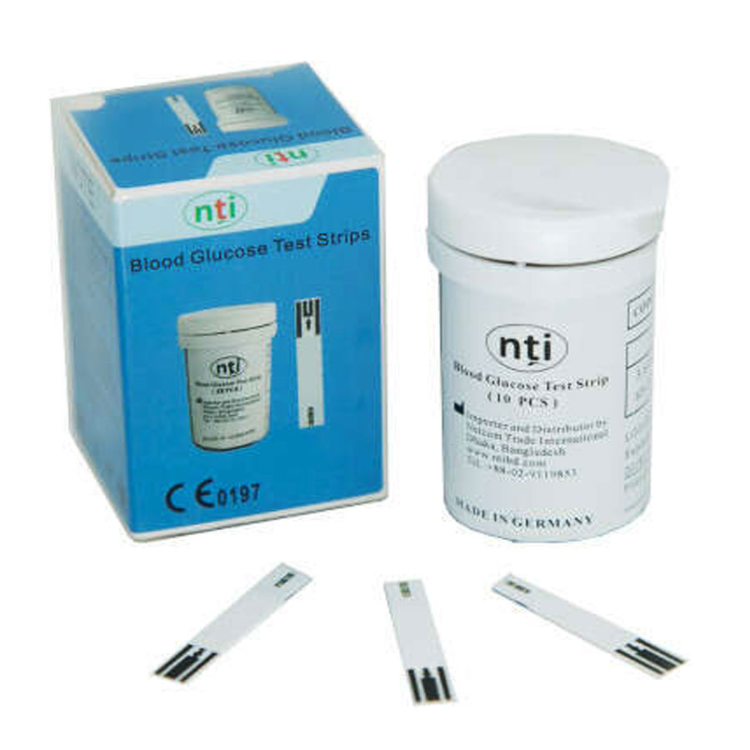
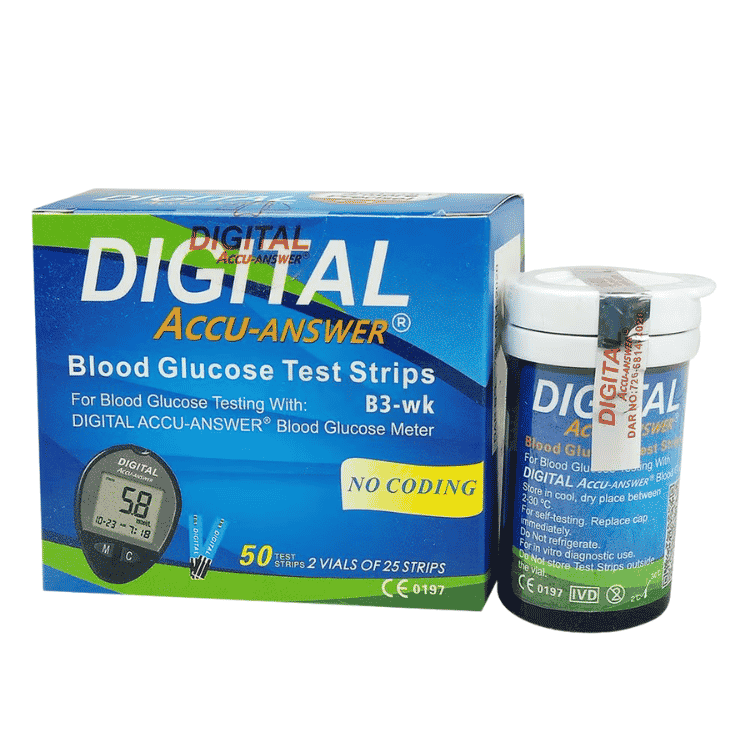
Effective diabetes management relies heavily on the accuracy and reliability of daily monitoring. NTI Blood Glucose Test Strips are engineered to provide clinically proven results for patients who require consistent and affordable blood sugar tracking. Designed with patented technology, these strips are a cornerstone of home-based diagnostic care, helping users make informed decisions about their diet, medication, and physical activity.
NTI test strips are manufactured with high-precision biosensor technology to ensure that every reading is as close to a laboratory result as possible.
Sample Size: Requires a small blood volume, typically around 0.5 µL to 0.8 µL, reducing the need for deep or painful lancing.
Measurement Range: Capable of measuring glucose levels between 0.6 – 33.3 mmol/L (approximately 10 – 600 mg/dL).
Reaction Time: Provides results quickly, usually within 5 to 10 seconds after the blood sample is applied.
Compatibility: Specifically designed for use with NTI Blood Glucose Monitoring Systems (such as the BGM-202 and BGM-208 models).
Operating Conditions: Works efficiently within a humidity range of 10% - 95% RH, making them resilient in various climates, including humid environments like Bangladesh.
Patented Technology for Clinical Accuracy
The hallmark of NTI strips is their patented electrode technology. This ensures that the chemical reaction between the blood glucose and the reagents on the strip—typically glucose oxidase—produces a stable electrical signal. This signal is then translated by the meter into a precise numerical value. Studies indicate that NTI strips maintain a high level of consistency, with most readings falling within the international standard of ±15% of laboratory measurements.
The strips feature an "easy-fill" window. When the edge of the strip touches the blood drop, the strip automatically draws the blood into the reaction chamber via capillary action. In patient surveys, 98% of users rated the NTI testing procedure as "easy" or "very easy," highlighting its accessibility for the elderly or those with limited dexterity.
One of the primary barriers to consistent testing is the cost of consumables. NTI has positioned itself as a high-performance yet affordable alternative to premium global brands. This affordability encourages patients to adhere to their doctor-prescribed testing schedules, whether that is twice a day for Type 2 diabetes or up to ten times a day for Type 1 management.
To achieve the most accurate results, it is essential to follow a standardized testing protocol:
Preparation: Wash your hands thoroughly with warm, soapy water and dry them completely. Residual moisture or food particles (especially fruit sugars) can contaminate the sample and cause false high readings.
Meter Setup: Take a fresh strip from the vial and immediately close the cap tightly. Insert the contact end of the strip into the meter's port. The device should "wake up" or signal that it is ready for the sample.
Lancing: Use a sterile lancet to prick the side of your fingertip (this area is often less sensitive than the pad of the finger).
Sampling: Gently touch the tip of the test strip to the blood drop. Ensure the confirmation window on the strip is completely filled.
Reading: Wait for the countdown. Once the result appears, record it in your logbook or mobile app for future consultation with your healthcare provider.
Disposal: Remove the strip and dispose of it along with the used lancet in a puncture-proof biohazard container.
Proper maintenance of the strips is vital to prevent chemical degradation.
Environmental Control: Store the vial in a cool, dry place between 1°C and 30°C. Avoid direct sunlight, extreme heat, or freezing temperatures.
The "Six-Month" Rule: Once a vial is opened, the strips are generally valid for 3 to 6 months. It is a best practice to write the "date opened" on the side of the container.
Single Use Only: Never attempt to reuse a strip. Once the chemical reagent has reacted, the strip becomes inert.
Avoid Contamination: Do not handle strips with wet or dirty hands, and do not move them to a different container or vial, as the original vial contains drying agents (desiccants) that keep the strips fresh.
While NTI strips are highly accurate, certain physiological factors can influence readings. For instance, severe dehydration or an extremely high/low red blood cell count (hematocrit) can impact the electrical conductivity of the sample. If a result seems inconsistent with how you feel—such as feeling "low" (hypoglycemic) while the meter shows a "high" number—it is recommended to repeat the test with a fresh strip or consult a medical professional immediately.
No reviews yet. Be the first to review!
Your cart is empty

.png)
.png)
.png)
.png)
.png)
 Upload Prescription
 Prescription Medicine
 Food & Nutrition
 Diabetic Care
 Diapers
 Dental Care
 Home Care
 OTC Medicine
 Healthcare Device
 Sexual Wellness
 Mother and Baby
 Herbal
 Personal Care
 Surgical

.png)
.png)