My Addresses
+ Add AddressNo saved addresses found.
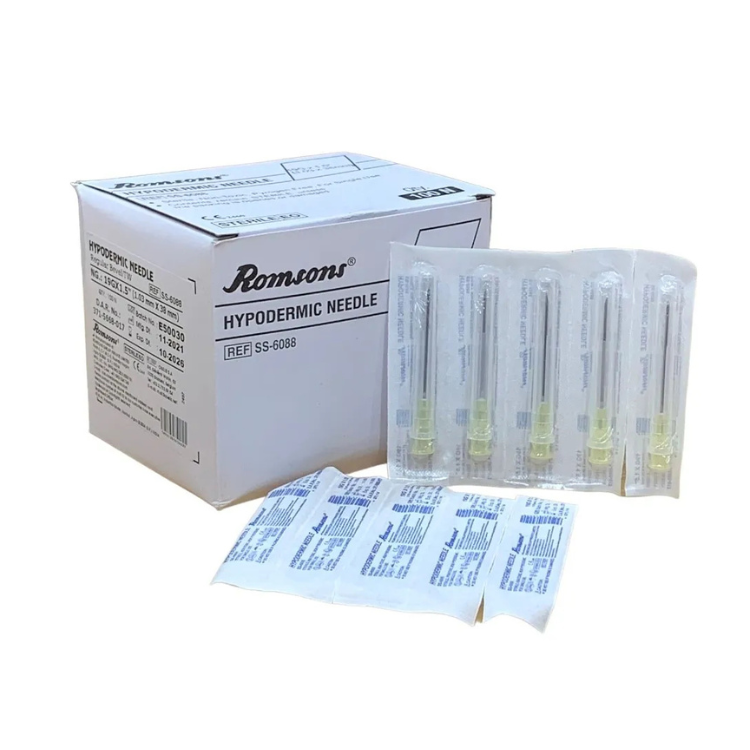
The disposable Luer needle is perhaps the most ubiquitous tool in modern medicine. While it may appear to be a simple piece of stainless steel, it is a highly engineered instrument designed to bridge the gap between the external medical environment and the internal systems of the human body. Its primary function is the delivery of medications or the withdrawal of fluids with minimal trauma to the patient.
A standard disposable Luer needle consists of three primary components, each serving a critical role in its functionality:
The Hub: This is the base of the needle, typically made of translucent polypropylene. The translucency is a deliberate design choice, allowing clinicians to observe "flashback"—the appearance of blood or fluid—to confirm successful vessel entry.
The Cannula (Shaft): This is the long, hollow tube made of medical-grade stainless steel. It is often coated with a micro-thin layer of medical-grade silicone to reduce friction during insertion, significantly improving patient comfort.
The Point/Bevel: The tip of the needle is ground at an angle, known as the bevel. A "regular" bevel is standard for intramuscular injections, while a "short" bevel is often used for arterial or intravenous access to prevent piercing the back wall of the vessel.
The name "Luer" refers to the standardized system of small-scale fluid fittings used for making leak-free connections between male and female parts. In the context of needles, there are two main types:
Luer Slip: The needle hub simply slides onto the syringe barrel, held in place by friction. This is ideal for quick applications where high pressure isn't expected.
Luer Lock: The hub features a threaded flange that screws into the syringe. This provides a secure, "locked" connection that prevents the needle from popping off under the pressure of viscous medications.
Precision in needle selection is governed by two measurements: Gauge (G) and Length.
Gauge: Refers to the outer diameter of the needle. Paradoxically, the higher the gauge number, the thinner the needle. For example, a 30G needle is much finer than an 18G needle.
Length: Measured in inches or millimeters, length is chosen based on the depth of the target tissue (e.g., subcutaneous vs. intramuscular).
To prevent errors in fast-paced clinical settings, the ISO 6009 standard dictates a universal color-coding system for needle hubs.
Disposable Luer needles are manufactured under rigorous cleanroom conditions. They are typically sterilized using Ethylene Oxide (EtO) or Gamma Radiation. Each needle is individually packaged in a "peel-pack" or a rigid plastic sheath to maintain a sterile barrier until the moment of use.
Being "disposable" is their most vital safety feature. Single-use designs eliminate the risk of cross-contamination and healthcare-associated infections (HAIs). Furthermore, modern iterations often include Safety Engineered Devices (SEDs), such as retractable sheaths or hinged shields, to protect healthcare workers from accidental needlestick injuries.
The disposable Luer needle is the unsung hero of the pharmaceutical revolution. Without the ability to penetrate the skin barrier with consistent precision, many life-saving biologics, vaccines, and emergency medications would be impossible to administer. By balancing sharpness (to reduce pain), durability (to prevent breaking), and standardization (to ensure compatibility), the Luer needle remains a cornerstone of global healthcare infrastructure.
No reviews yet. Be the first to review!
Your cart is empty

.png)
.png)
.png)
.png)
.png)
 Upload Prescription
 Prescription Medicine
 Food & Nutrition
 Diabetic Care
 Diapers
 Dental Care
 Home Care
 OTC Medicine
 Healthcare Device
 Sexual Wellness
 Mother and Baby
 Herbal
 Personal Care
 Surgical

.png)
.png)