My Addresses
+ Add AddressNo saved addresses found.
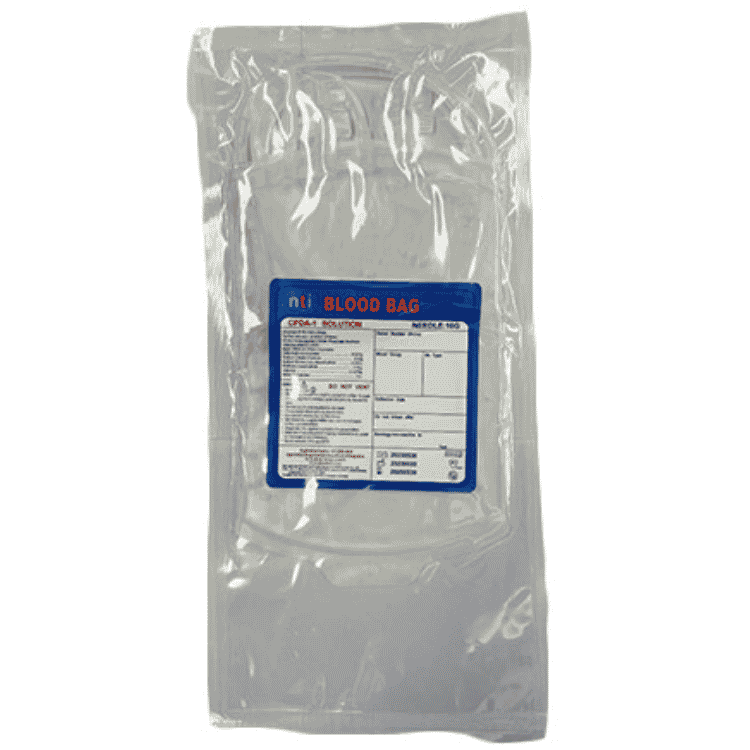
The production of blood bags requires highly specialized medical-grade films that meet rigorous safety, durability, and biocompatibility standards. Blown film extrusion is the primary manufacturing process used to create these thin, flexible, and sterile-capable membranes. These films are not merely containers; they are sophisticated biological interfaces designed to preserve the viability of red blood cells, platelets, and plasma over extended storage periods.
The most common material used in blood bag film is Plasticized Polyvinyl Chloride (PVC). While PVC is naturally rigid, the addition of plasticizers—most notably Di(2-ethylhexyl) phthalate (DEHP)—transforms it into a flexible, resilient material.
DEHP serves a dual purpose: it provides the necessary elasticity for the bag to expand and contract during centrifugation and infusion, and it has a stabilizing effect on red blood cell membranes, significantly reducing hemolysis (the rupture of red blood cells) during storage. In recent years, "DEHP-free" alternatives using Citrates or DINCH (Di-isononyl cyclohexane-1,2-dicarboxylate) have emerged to address toxicological concerns, particularly for neonatal and pediatric applications. Non-PVC alternatives, such as multi-layer polyolefin or Thermoplastic Elastomer (TPE) films, are also used for specific components like platelet storage, where high gas permeability is required.
The manufacturing of blood bag film via blown extrusion involves several critical stages to ensure uniformity and purity:
Extrusion and Melting: Medical-grade resin pellets are fed into an extruder where they are melted under precise temperature controls to prevent thermal degradation of the PVC.
Annular Die and Bubble Formation: The molten polymer is forced through a circular (annular) die. Air is injected into the center of the extruded tube, inflating it into a "bubble." This process stretches the film both longitudinally (machine direction) and transversally (cross direction), which induces molecular orientation and enhances the film's mechanical strength.
Cooling and Gauging: The bubble is cooled by an external air ring. Sophisticated sensors monitor the "gauge" or thickness of the film in real-time. For blood bags, the thickness typically ranges between 350 and 450 micrometers.
Collapsing and Winding: The cooled bubble is collapsed by frames and wound into rolls in a Class 10,000 (ISO 7) or higher cleanroom environment to prevent particulate contamination.
The film must be non-toxic, non-pyrogenic, and non-hemolytic. It must comply with international standards such as ISO 10993 (Biological Evaluation of Medical Devices) and USP Class VI. The internal surface of the film must be chemically inert to ensure that it does not interact negatively with the anticoagulants (like CPDA-1) or the blood components themselves.
Gas exchange is vital, especially for platelet storage. Platelets remain viable only if they can "breathe"—taking in oxygen and releasing carbon dioxide to maintain a stable pH. Blown extrusion allows for the creation of multi-layered films where the gas transmission rate (GTR) can be precisely engineered.
Blood bags undergo extreme mechanical stress during centrifugation, where they are spun at high speeds to separate blood components. The film must possess high tensile strength and puncture resistance. Furthermore, the film must exhibit excellent Radio Frequency (RF) or ultrasonic weldability, as the bags are formed by sealing two sheets of film together to create a leak-proof hermetic bond.
The film must withstand sterilization processes, typically steam autoclaving at 121°C. It must maintain its structural integrity and flexibility without becoming brittle or losing its seal strength after exposure to high heat and pressure.
High optical clarity is essential for medical professionals to inspect the blood for clots, discoloration, or particulate matter. However, the external surface of the film is often slightly "frosted" or textured during the extrusion process to prevent "blocking"—a phenomenon where two smooth plastic surfaces stick together, making the bags difficult to handle or fill.
Every meter of blown film intended for blood bags undergoes rigorous testing. This includes:
Dimensional Analysis: Ensuring uniform thickness to prevent "weak spots" that could burst during centrifugation.
Extractable Testing: Ensuring that no unapproved chemicals or excessive amounts of plasticizer migrate into the blood.
Particulate Monitoring: Maintaining a near-zero threshold for dust or fiber contamination within the extrusion line.
Blown extruded film for blood bags represents a pinnacle of medical plastics engineering. By balancing the need for mechanical toughness, chemical stability, and biological compatibility, these films provide a safe environment for the life-saving fluids they contain. As the medical industry moves toward more specialized blood component therapies, the evolution of these films—through new polymer blends and advanced co-extrusion techniques—continues to be a critical area of healthcare innovation.
No reviews yet. Be the first to review!
Your cart is empty

.png)
.png)
.png)
.png)
.png)
 Upload Prescription
 Prescription Medicine
 Food & Nutrition
 Diabetic Care
 Diapers
 Dental Care
 Home Care
 OTC Medicine
 Healthcare Device
 Sexual Wellness
 Mother and Baby
 Herbal
 Personal Care
 Surgical

.png)
.png)