My Addresses
+ Add AddressNo saved addresses found.
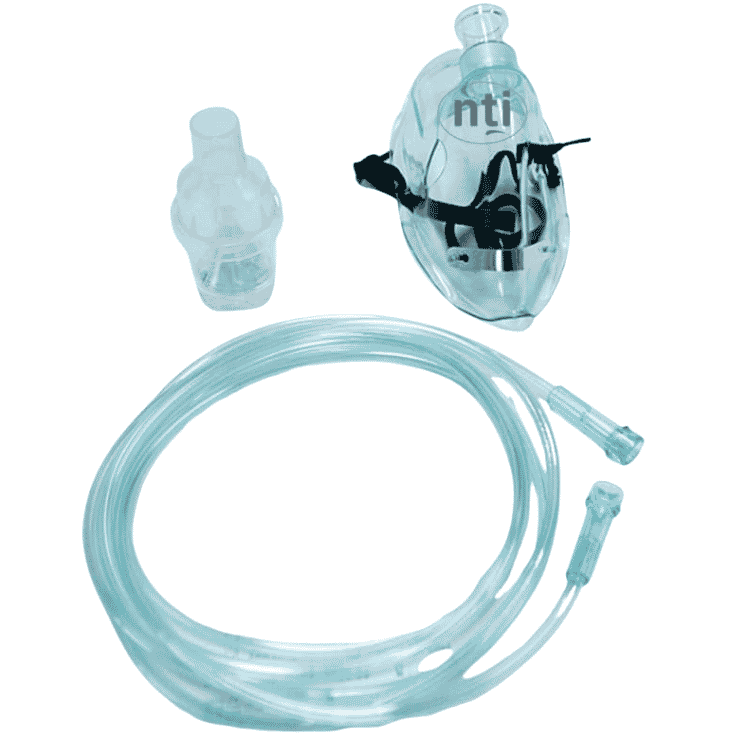
Nebulizer masks are essential interfaces in respiratory therapy, designed to deliver aerosolized medication directly into a patient's lungs. While the nebulizer machine (compressor) and the medication cup are responsible for creating the mist, the mask is the critical component that ensures efficient delivery and patient comfort. These masks are engineered to convert liquid medication—such as bronchodilators or corticosteroids—into a fine mist that can be easily inhaled by patients suffering from asthma, Chronic Obstructive Pulmonary Disease (COPD), cystic fibrosis, or other respiratory ailments.
The efficacy and safety of a nebulizer mask begin with its material construction. Most modern medical-grade masks are manufactured from medical-grade Polyvinyl Chloride (PVC) or Thermoplastic Elastomers (TPE).
A critical requirement for these materials is that they must be "latex-free" and often "DEHP-free" to prevent allergic reactions and minimize the risk of chemical leaching into the respiratory tract. The material is chosen for its softness and flexibility, allowing it to conform to the contours of the human face. High transparency is also a technical requirement, enabling healthcare providers to monitor the patient’s lip color, breathing patterns, and the presence of mist inside the mask during the treatment session.
A standard nebulizer mask consists of several integrated parts, each serving a specific physiological or mechanical function:
The Mask Body: The shell is anatomically shaped to cover both the nose and mouth. This "dual-route" delivery is essential because many patients in respiratory distress tend to breathe through their mouths, but nasal inhalation is also captured.
Adjustable Nose Clip: An aluminum or plastic bridge is often embedded at the top of the mask. This allows the user to pinch the mask around the bridge of the nose, ensuring a tight seal that prevents medication from escaping toward the eyes, which could cause irritation.
Exhalation Ports: Small side vents are strategically placed to allow exhaled CO2 to escape while maintaining a high concentration of the aerosolized medication during the inhalation phase.
Elastic Head Strap: The swivel-adjustable strap ensures that the mask remains in a stable position without requiring the patient to hold it manually, which is particularly beneficial during long treatments or for patients with limited mobility.
Universal Connector: At the base of the mask is a standard 22mm or 18mm connector that fits securely onto the nebulizer medication cup, ensuring a leak-proof path for the aerosol.
While the underlying technology remains the same, the design requirements for adult and child masks differ significantly due to anatomical and psychological factors.
The adult variant is designed with a larger volume and a more rigid structure. It focuses on maximizing the inspiratory flow rate. Because adults have larger facial structures and higher lung capacities, the mask must be deep enough to provide an adequate "reservoir" for the mist between breaths. The seal is generally firmer to accommodate the higher pressures of adult breathing.
Pediatric masks are not simply smaller versions of adult masks; they are specialized medical tools.
Anatomy: They are sculpted to fit the smaller, flatter nasal bridges of children and the rounder facial profiles of infants.
Comfort: The PVC used in child masks is often thinner and softer to prevent pressure sores on sensitive skin.
Engagement: Many pediatric masks are "character-themed" (e.g., shaped like a dragon, fish, or elephant) to reduce "mask anxiety" and improve compliance in young children who might otherwise be frightened by the device.
Seal Integrity: Since children often move during treatment, pediatric masks are designed to maintain a seal even if the child is not perfectly still.
The primary goal of the nebulizer mask is to optimize the "Mass Median Aerodynamic Diameter" (MMAD) of the particles reaching the lungs. For effective deep-lung penetration, particles should be between 1 and 5 microns.
The mask acts as a buffer chamber. When the patient exhales, the mist continues to accumulate inside the mask volume. Upon the next inhalation, the patient receives a concentrated "bolus" of medication. High-efficiency masks are designed to minimize "dead space"—areas where medication might settle and be wasted rather than inhaled.
To ensure the longevity of the mask and the safety of the patient, strict protocols must be followed:
Cleaning: Masks should be rinsed with warm water after every use to prevent medication buildup, which can become a breeding ground for bacteria.
Disinfection: Once a day, the mask should be soaked in a solution of white vinegar and water (1:3 ratio) or a medical-grade disinfectant.
Replacement: Even with proper cleaning, nebulizer masks are generally considered "limited-use" items. Over time, the plastic becomes cloudy and less flexible, affecting the seal. It is recommended to replace the mask every 1 to 3 months depending on frequency of use.
The nebulizer mask is a vital link in the chain of respiratory care. Whether for an adult managing a chronic condition or a child recovering from an acute infection, the mask’s design—from its biocompatible PVC construction to its anatomical shaping—is dedicated to one goal: ensuring that every drop of life-saving medication reaches the lungs efficiently and comfortably. By choosing the correct size and maintaining the integrity of the mask, patients can ensure the highest possible success rate for their nebulization therapy.
No reviews yet. Be the first to review!
Your cart is empty

.png)
.png)
.png)
.png)
.png)
 Upload Prescription
 Prescription Medicine
 Food & Nutrition
 Diabetic Care
 Diapers
 Dental Care
 Home Care
 OTC Medicine
 Healthcare Device
 Sexual Wellness
 Mother and Baby
 Herbal
 Personal Care
 Surgical

.png)
.png)